The Seventies was a radical period and this was also reflected on the nation’s TV screens. Leading the way in Australian TV’s loss of innocence were racy soap opera dramas Number 96 and The Box and the comedy-drama Alvin Purple. Also during the decade, Australian TV finally burst into colour, several years after its overseas counterparts — and a Sunday night tradition was born with the launch of the legendary music show Countdown.
1970:
- Following the departure of Graham Kennedy from GTV9, In Melbourne Tonight continues with a different host each night — Ugly Dave Gray, Stuart Wagstaff, Jimmy Hannan and Bert Newton.
- April 13: The Long Arm is the 0-10 Network’s first attempt at series drama. It lasted three months.
- June 1: The Seven Network launches a new daytime quiz show, Temptation, hosted by Tony Barber.
- July 9: The official opening of the microwave link between the east and west coasts of Australia, allowing the transmission of telecommunications and television program material across the country. The launch program is a one-hour special Project Australia — featuring segments contributed from various Australian cities.
- October 10: The launch of HSV7’s Saturday night variety show Penthouse Club, hosted by Michael Williamson and Mary Hardy, featuring a mixture of variety, comedy, harness racing coverage and, from 1972, the weekly Tattslotto draw. It runs until 1979 after changing its name briefly to Saturday Night Live.
- October 21: In Melbourne Tonight celebrates its 3000th episode.
- TV Week Gold Logie Winners: Barry Crocker (Sound Of Music, Nine) and Maggie Tabberer (Maggie, Seven) and a special Gold Logie also awarded to Apollo 11 crew
1971:
- New TV stations: VEW8 Kalgoorlie (18 June), ABD6 Darwin (13 August), ITQ8 Mt Isa (11 September), NTD8 Darwin (11 November).
- January 4: The highly-acclaimed American children’s series Sesame Street begins on ABC.
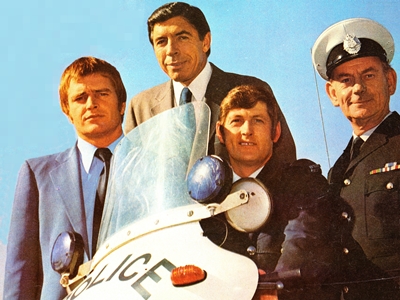
- February 25: Matlock Police, a new weekly police drama from Crawford Productions, starts a five year run on 0-10.
- March 24: GTV9 axes Tonight With Stuart Wagstaff and The Ugly Dave Gray Show — the two remaining spin-offs from the former In Melbourne Tonight.
- April 24:Young Talent Time starts an 18-year run on the 0-10 Network.
- June 28: Bob and Dolly Dyer’s Pick-A-Box signs off for the last time, ending a 14-year run on television. The program is replaced the following week by The Great Temptation, a prime-time version of afternoon quiz show Temptation.
- October 9: Hey Hey It’s Saturday begins as a Saturday morning cartoon show on GTV9, initially hosted by Daryl Somers and VFL footballer Peter McKenna, who was later replaced by Ossie Ostrich.
- November 15: Two years after resigning from In Melbourne Tonight, Graham Kennedy makes a return to TV with the first of two comedy specials. The second special airs in early 1972.
- November 22: A Current Affair with Mike Willesee premieres on Nine, initially screening weeknights at 9.30pm before shifting to the 7pm timeslot two months later.
- TV Week Gold Logie Winners: Gerard Kennedy (Division 4, Nine) and Maggie Tabberer (Maggie, Seven). A special Gold Logie is also awarded to Bob Dyer and his wife Dolly in recognition of their 14 years of presenting quiz show Pick-A-Box.
1972:
- February 15: The Government announces that all Australian TV stations will convert to colour on 1 March 1975. The transition is expected to cost the ABC around $46 million and the commercial sector $70 million — although some stations had already installed colour-compatible equipment.
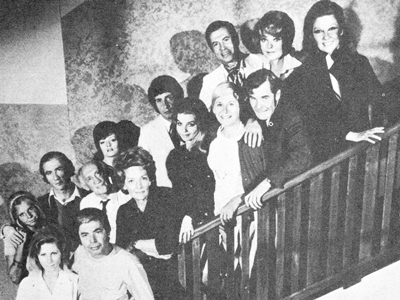
- March: The 0-10 Network screens the first episode of the ground breaking evening series Number 96, which created much controversy over its sex and nude scenes.
- March 20: Brisbane’s BTQ7 claims to launch Australia’s first one-hour news bulletin with The Big News.
- May 29: ATN7 launches Sydney’s first one-hour news bulletin, Seven National News Hour
- September 19: The Graham Kennedy Show begins on Nine.
- TV Week Gold Logie Winner: Gerard Kennedy (Division 4, Nine)
1973:
- Number 96 becomes the most popular program on Australian TV.
- February 5: The Mike Walsh Show, a live daytime variety show from the studios of TEN10, starts a four-year run on 0-10 before switching to Nine in 1977.
- February: Garry Meadows hosts 0-10’s The Price Is Right, a daytime game show that was so popular a separate prime time edition was also launched.
- February 14: ABC’s Certain Women begins as a six-part mini-series before being renewed as an ongoing series to run for four years.
- June 11: Nine launches No Man’s Land, the all-female current affairs program.
- TV Week Gold Logie Winner: Tony Barber (Great Temptation, Seven)
1974:
- January 7: Seven launches variety show JC At 8.30. It lasted two weeks.
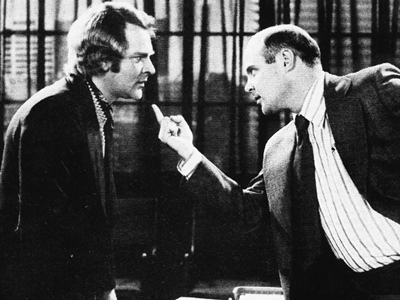
- February 11: The Box, a new nightly series set to create the same controversy as Number 96, premieres on the 0-10 Network. It finishes the year as the second most popular program on Australian TV behind Number 96.
- March 18: Grundy Productions launches its first drama series Class Of ‘74, a five-night-a-week school drama produced for Seven. It becomes Class Of ‘75 the following year before being axed by the network.
- October: Test colour transmissions commence across all networks.
- November 8: Radio DJ Grant Goldman hosts the first edition of ABC’s Countdown.
- December 31: The Nine Network and News Limited launch a 28-hour telethon to raise funds for the relief effort of Darwin after the city was wiped out by Cyclone Tracy.
- TV Week Gold Logie Winners: Graham Kennedy (The Graham Kennedy Show, Nine) and Pat McDonald (Number 96, 0-10)

1975:
- March 1: C-DAY. Television stations convert to full-time colour transmission.
- Graham Kennedy is banned from appearing on live television after his infamous “crow call” and subsequent editorials on Nine’s Graham Kennedy Show.
- May 12: Nine’s new variety show The Don Lane Show begins a successful eight year run.
- TEN10 Sydney launches its first one-hour news service, Eyewitness Newshour.
- September 5: Episode 839, the infamous ‘bomb-blast’ episode of Number 96 which wiped out four regular characters in a bid to reinstate the series’ former top rating position.
- October 13: News program Eleven AM, with Roger Climpson, debuts on ATN7 Sydney.
- TV Week Gold Logie Winners: Ernie Sigley and Denise Drysdale (The Ernie Sigley Show, Nine). First TV Week Logie Awards presentation telecast in colour.
1976:
- New TV station: RTS5A Riverland (26 November)
- 0-10, in association with South Pacific Films and Paramount Pictures TV, produces a 26-episode children’s series The Lost Islands. The series had a modest following in Australia but sold well overseas.
- July: ABC, Seven and Nine combine forces to provide Olympic Games coverage from Montreal. The opening and closing ceremonies are telecast live, with highlights packages screening each evening.
- November: Grundy’s hospital drama The Young Doctors and Crawford Productions’ World War II drama The Sullivans begin on Nine.
- November: Mike Walsh announces that he will be moving The Mike Walsh Show from the 0-10 Network to the Nine Network early in 1977. The Nine Network also announces it has signed up Paul Hogan who had previously appeared on the Seven Network.
- TV Week Gold Logie Winners: Norman Gunston (The Norman Gunston Show, ABC) and Denise Drysdale (The Ernie Sigley Show, Nine).
1977:
- New TV Station: GTW11 Geraldton (21 January).
- January 24: Graham Kennedy returns to television as host of 0-10’s evening game show Blankety Blanks, which became a ratings winner. The show continued for two years.
- February 7: The Mike Walsh Show debuts on the Nine Network after four years on the 0-10 Network.
- April: The Seven Network successfully bids for exclusive Australian rights to televise the 1980 Olympic Games from Moscow. The network paid $1 million in the deal, outbidding rival offers from ABC and Nine.
- April: Countdown celebrates its 100th episode.
- April-May: Roots, the multi-million dollar US mini-series, airs on 0-10 and receives the highest ratings of the decade.
- Seven televises the VFL Grand Final live to Melbourne for the first time.
- The final episodes of Homicide, The Box, Number 96 and Bellbird go to air.
- Hotel Story, a Crawford production for 0-10, begins production in Melbourne. The series was axed before the first episode had even gone to air.
- The Federal Government investigates a proposal to establish a domestic satellite system, enabling instant transmission of television and other communications across Australia and in particular to remote areas.
- December: The Nine Network’s World Series Cricket launches in opposition to the traditional test cricket coverage on ABC.
- TV Week Gold Logie Winners: Don Lane (The Don Lane Show, Nine) and Jeanne Little (The Mike Walsh Show, 0-10)
1978:
- March 20: ATV0 launches its one-hour news service, Eyewitness News with Bruce Mansfield.
- Against The Wind, the first major mini-series produced for Australian commercial television, is screened on Seven.
- August: ABC televises the 1978 Commonwealth Games from Edmonton, Canada. The opening and closing ceremonies are televised live, with event highlights each day.
- 64% of Melbourne and 70% of Sydney households now own colour TV sets, giving Australia one of the fastest changeovers to colour in the world.
- September: The Federal Government gives the go-ahead for the launch of a multicultural television service, to be operated by the Special Broadcasting Service (SBS), with the expectation of the new channel operating in Sydney and Melbourne by 1980.
- October: ATV0 makes a request to the Federal Government for permission to change its broadcast frequency to Channel 10.
- November 7: The 0-10 Network televises the Melbourne Cup to a national audience for the first time. The telecast is regarded as one of the largest national sports telecasts mounted to date.
- TV Week Gold Logie Winner: Graham Kennedy (Blankety Blanks, 0-10)
1979:
- February 8: The Government approves the application for ATV0 to convert its transmission to the Channel 10 frequency.
- February 11: Nine’s new weekly current affairs program 60 Minutes, based on a successful US show of the same name, has a lack lustre beginning but soon rises to become one of Australia’s highest rating programs.
- February 27: Grundy Productions’ new prime time series Prisoner starts a successful run on 0-10. It enjoys a large following both in Australia and overseas, particularly in the United Kingdom and parts of the United States.
- April 29: The Special Broadcasting Service (SBS) screens the first of a series of multicultural programs on ABC on Sunday mornings.
- July 1: Commercial television stations now required to screen ‘C’ classified programming, aimed solely at children aged 6 to 13, every weekday between 4pm and 5pm. Early ‘C’ classified programs include Simon Townsend’s Wonder World (0-10), Stax (Seven) and Shirl’s Neighbourhood (Seven) and re-classified existing shows The Curiosity Show and Skippy The Bush Kangaroo (both from Nine). Commercial stations are also required to screen a minimum of 30 minutes each weekday, prior to 4.00pm, of programming aimed at pre-school viewers.
- November: Rupert Murdoch takes control of TEN10 Sydney and his bid to takeover the Ansett transport company, which owns ATV0 Melbourne, sparks a review into media ownership by the Australian Broadcasting Tribunal.
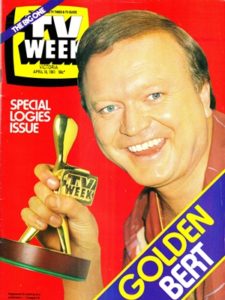
- TV Week Gold Logie Winner: Bert Newton (The Don Lane Show and New Faces, Nine)